
Root Canal Treatment Explained
Root canal treatment is delivered at EndoCare by a professional team that includes some of the most highly regarded specialists in the field.
Below you will find brief explanations about the different treatment options they provide. We explore the symptoms you might experience, what treatment means for the tooth, and what you may expect before, during and after the procedure.
Typical Root Canal Symptoms
If you’re experiencing dental pain or discomfort, it may be a sign you need endodontic (root canal) treatment.
Below, we’ve outlined some common symptoms and possible causes. If you notice any of these symptoms, please contact us right away.
If the discomfort lasts only a few moments, it may indicate mild inflammation of the tooth. Pulp (the soft, innermost area of the tooth containing nerves). However, sensitivity can also be caused by minor decay, a loose filling, or gum recession, which may not require extensive treatment.
Dental treatment can sometimes inflame the pulp inside the tooth, causing temporary sensitivity. Any pain should be temporary, but should it increase or last longer, this may indicate the need for root canal treatment.
This type of pain can result from several causes, such as decay, a loose filling, or even a small crack in the tooth. It may also indicate the beginning of an infection, or bruising around the roots of the tooth.
This pain often indicates that the tooth pulp has been .irreversibly damaged by deep decay or physical trauma.
Not all pain in the upper teeth and jaw is always related to the teeth, as often there can be referred pain from the air sinuses (sinusitis), or from the jaw joint (TMJ). We are happy to help with a professional assessment and diagnosis.
You may have an abscess – an infection in the surrounding tissue and bone. See an endodontist for prompt evaluation and treatment to relieve pain and save your tooth.
What Is A Root Canal Treatment
A root canal treatment is a procedure used to save to tooth when the pulp (the nerve) has become infected or inflammed. It involves gently removing the damaged pulp or infected material, cleaning and then sealing it to prevent further infection.
The Normal (Healthy) Situation
A healthy tooth has living pulp and no signs of infection, allowing it to sense temperature and pressure normally and remain pain-free.
Endodontic Treatment
Endodontic treatment removes the infected pulp, cleans and seals the tooth, relieving pain and restoring normal function.
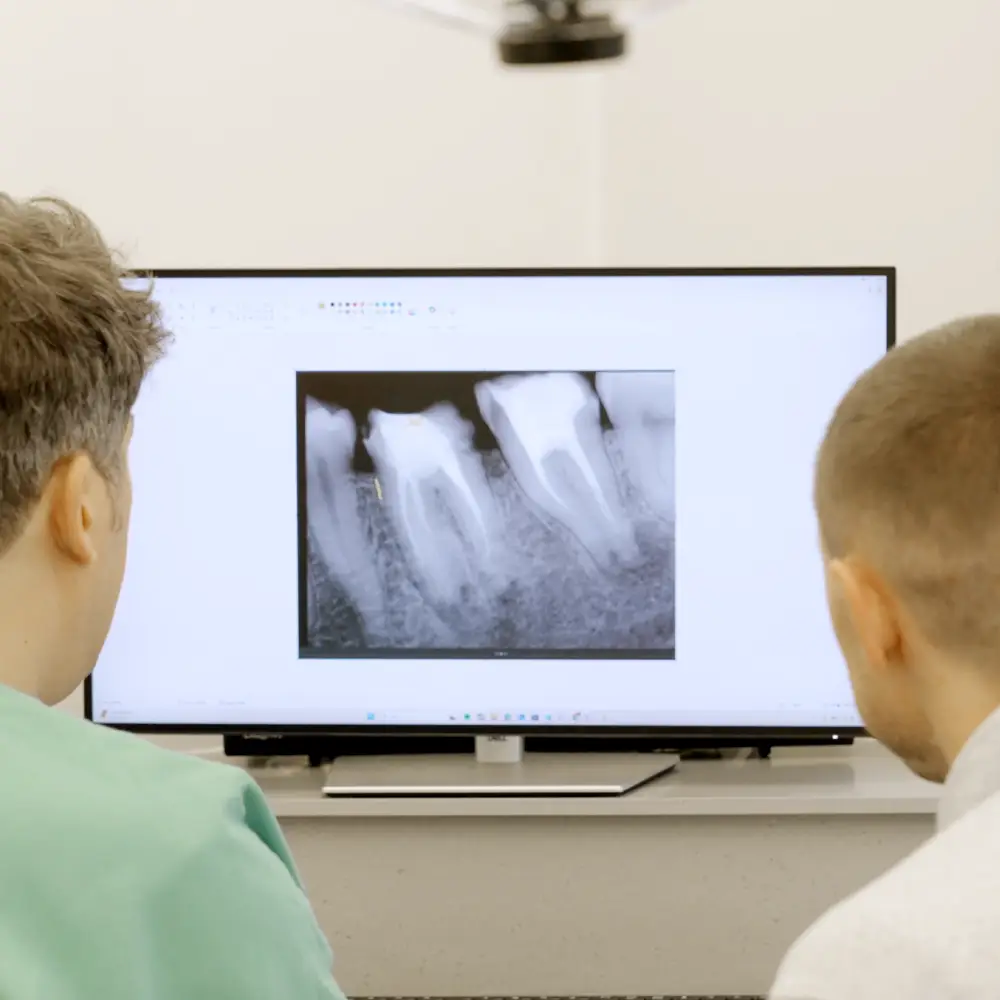
The Disease Process
An infected tooth has damaged pulp, causing inflammation, pressure, and pain. Left untreated, this can lead to a dental abscess and swelling.
Alternatives
In some cases, the only alternative is to extract the tooth, which may require further treatment to replace it.
Our Root Canal Treatment
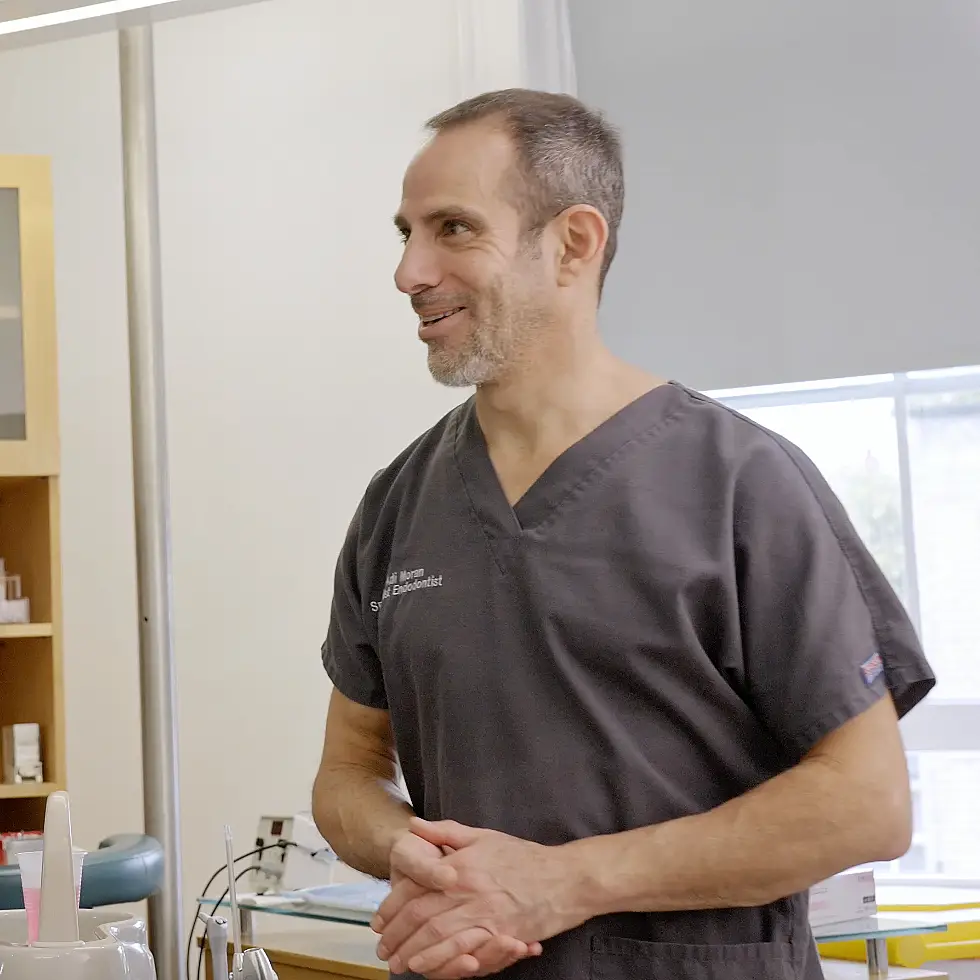
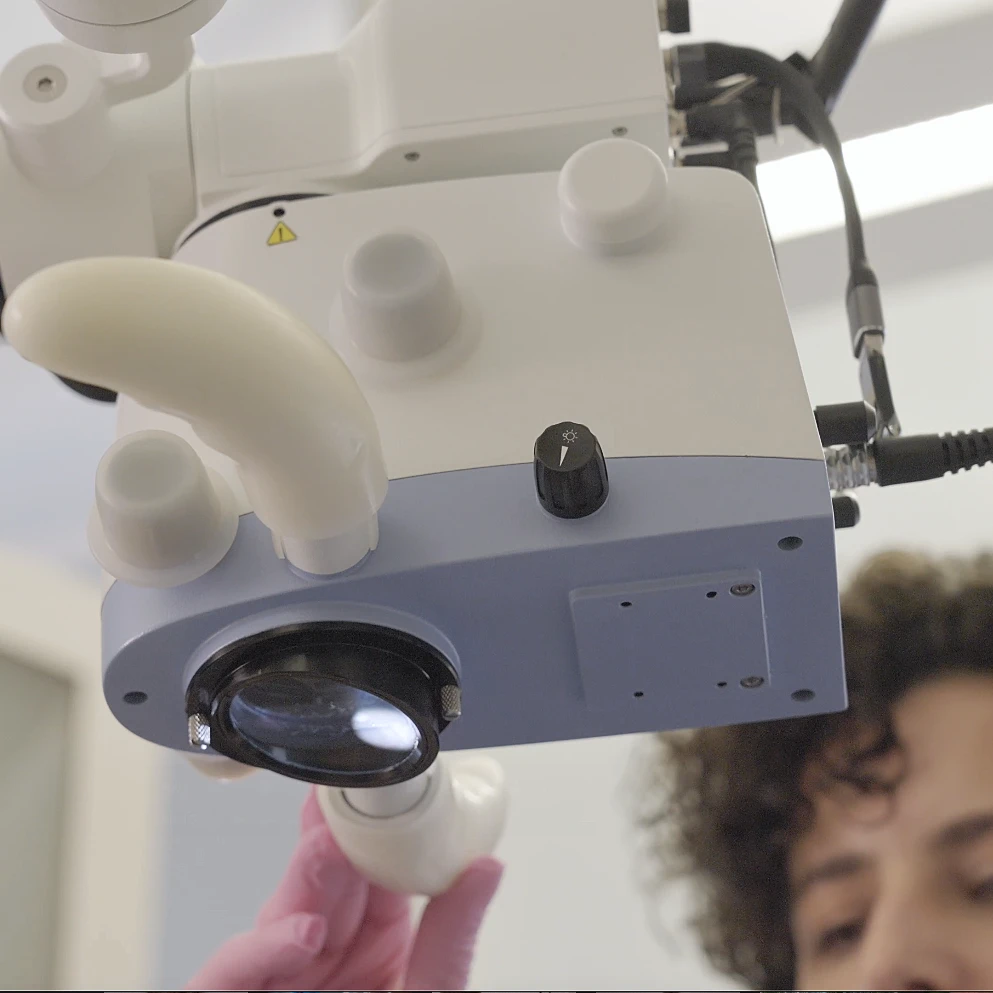


As an expert team equipped with the latest technology, we take time to discuss your symptoms, scan carefully, and assess the treatment you need.
We then guide you through the next steps, explaining your root canal treatment and what to expect at every stage.

Endodontic, or root canal treatment can often be completed in one or two visits.
First, the area is gently numbed so you remain completely comfortable throughout the procedure.
A small protective sheet, called a rubber dam, is placed over your tooth to keep the area clean and dry.
We then make a small opening in the crown of your tooth to remove the infected pulp from inside.

Once the space is cleaned and shaped, the root canals are filled with a rubber-like material called gutta-percha – to create a complete seal.
In most cases, a temporary filling is used to close the opening in your tooth.
After the tooth is sealed, you’ll be asked to return for a follow-up appointment to ensure everything is healing as it should.

Once your treatment with us is complete, you’ll need to go back to your regular dentist to replace the temporary filling and fully restore the tooth, protecting it from future infection.
We often recommend that this tooth is crowned to reduce the risk of fracture.

If endodontic treatment has failed for any reason, it will often be possible to re-treat the tooth. This involves identifying the reason for treatment failure, and rectifying any issues prior to re-sealing the canals.
Endodontic Specialists are well-experienced in this kind of treatment, optimising results.